8812 Series: Lightweight Static Control
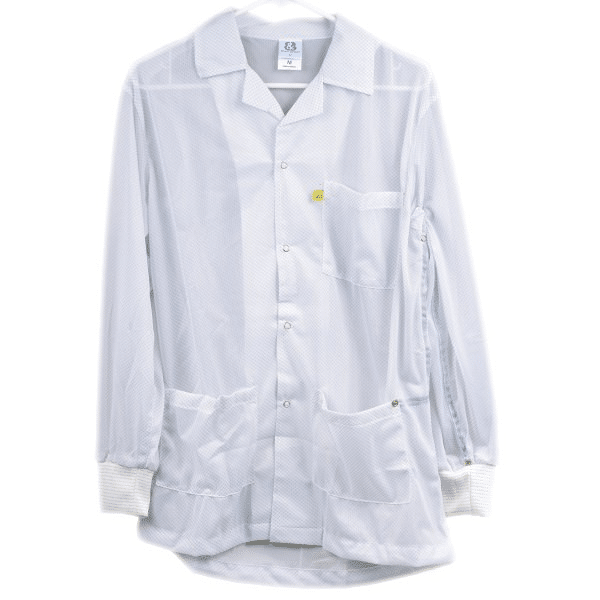
The Lightweight 8812 Series Garment is the industry standard for operators requiring consistent static control without the weight of traditional lab coats. Designed as a primary shield, these garments prevent the discharge of static electricity from the user’s clothing to sensitive electronic components, ensuring a safe and compliant workspace.
Product Features
-
Full Compliance: Meets the strict static shielding requirements of ANSI / ESD Association S20.20 for “Static Control Garments.”
-
Operator Comfort: Constructed from breathable, lightweight fabric to reduce heat stress during extended shifts.
-
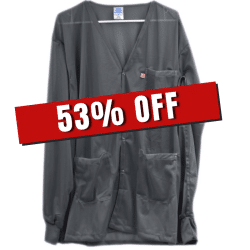
Versatile Styles: Available in two lengths—Jacket (waist-length) for mobility or Lab Coat (3/4 length) for maximum coverage.
-
Grounding Options: Features customizable cuffs (Snap or Knit) and necklines (V-neck or Collar) to integrate seamlessly into your facility’s grounding protocols.
-
Custom Configurations: Ability to add or remove pockets based on specific operational needs (MOQ applies).
Industry Applications
The 8812 Series is specifically designed for environments where electrostatic discharge (ESD) can cause catastrophic failure or latent defects in sensitive technology. Primary applications include:
-
Electronic Assembly: Ideal for PCB assembly, soldering stations, and hardware integration.
-
Semiconductor Manufacturing: Protecting wafers and microchips from human-generated static.
-
Aerospace & Defense: Safe handling of sensitive avionics and communication equipment.
-
Medical Device Production: Maintaining a static-safe environment for delicate diagnostic tools.
-
Testing & R&D Labs: Providing reliable protection for engineers and technicians during prototyping.
Table Specifications: 8812 Series
The 8812 Series is defined by its precision-engineered fabric and industry-leading static dissipation rates. Below is a breakdown of the technical standards that make this garment a staple in controlled environments.
| Dimension | Specification | Test Method |
| Composition | 88% Polyester 12% Carbon | ASTM D-629 |
| Ounces Per Square Yard | 2.2 | ASTM D-3776-85 |
| Surface Resistivity | 6.98 x 10⁵ Ohms Square | GTM Initial |
| Charge Decay | 0.5 seconds per 1000 volts | GTM |
| Finished Width | 60 | ASTM D-3774-89 |
| Wales per Inch | 36 | ASTM D-3887-80 |
| Courses per Inch | 55 | |
| Wash Shrinkage Length | 3 | AATCC-135-1987 |
| Wash Shrinkage Width | 3 | (1 (160˚) x 10) (Aiix10) |
| Grab Tensile Length | 72 | ASTM D-5034 |
| Grab Tensile Width | 50 | ASTM D-5034 |
| Trap Tensile Length | 16 | ASTM D-5735 |
| Trap Tensile Width | 7.5 | ASTM D-5735 |
| Elongation @ Break Length | 57 | ASTM D-5034 |
| Elongation @ Break Width | 127 | ASTM D-5034 |
| Stretch Length | 7 | ASTM D-4964 (5 lbs) |
| Stretch Width | 50 | ASTM D-4964 (5 lbs) |
| Flammability | Pass | 16 CFR 1610 |
| Colorfastness | Depending on Shade | AATCC |
Laundering & Maintenance Instructions
To maintain the electrical integrity and prolong the life of your 8812 Series ESD Jacket, proper laundering is critical. Standard industrial cleaning or harsh chemicals can break down the carbon-suffused fibers, compromising the garment’s ability to dissipate static.
Best Practices for ESD Longevity
-
Detergent: Use only non-ionic, liquid detergents. Avoid powders or detergents with added “brighteners” or softeners.
-
Temperature: Machine wash in Cold or Warm water (100°F / 38°C maximum).
-
Drying: Tumble dry on Low heat or hang dry. High heat can cause the synthetic fibers to shrink or become brittle.
-
Bleach & Softeners: NEVER use bleach, starch, or fabric softeners. These coatings will insulate the conductive fibers and render the ESD protection useless.
Expected Service Life
Most ANSI/ESD S20.20 certified smocks are rated for approximately 80 to 100 washes when following these guidelines.
Warning: Using a standard “industrial washing service” that utilizes high-heat drying or harsh chemicals may degrade the garment’s effectiveness in as little as one cycle.
Testing Recommendation
We recommend testing your garments periodically using a surface resistance meter to ensure they still meet your facility’s ESD safety requirements.
ANSI / ESD S20.20 Compliance
A certified “Static Control Garment” is a critical component of any ESD Protected Area (EPA). The 8812 Series is designed to meet the rigorous standards set by the ESD Association to prevent costly damage to sensitive electronic components.
Understanding the Standard
According to ANSI/ESD S20.20, a compliant garment must maintain a surface resistance of less than 1 x 10¹¹ Ohms when measured point-to-point.
Why the 8812 Series Complies:
-
Faraday Cage Effect: The integrated conductive grid (6mm x 5mm) acts as a shield, containing static charges generated by the wearer’s inner clothing and preventing them from reaching sensitive devices.
-
Point-to-Point Resistance: Rigorously tested to stay well within the 1 x 10¹¹ Ohm limit, typically measuring in the 106 to 108 range.
-
Reliable Grounding: When used with the integrated hip stud and cuff snaps, the jacket can serve as a primary grounding path for the wearer, meeting the requirements for Garment System testing.
Testing & Verification
We recommend using the ESD TR53 “Garments Section” test method for your periodic compliance audits. Regular testing ensures that laundering or wear-and-tear has not compromised the conductive path of the garment.
Compliance Note: To maintain your facility’s S20.20 certification, ensure all personnel are trained on the proper laundering of these jackets to prevent insulative build-up from standard detergents.